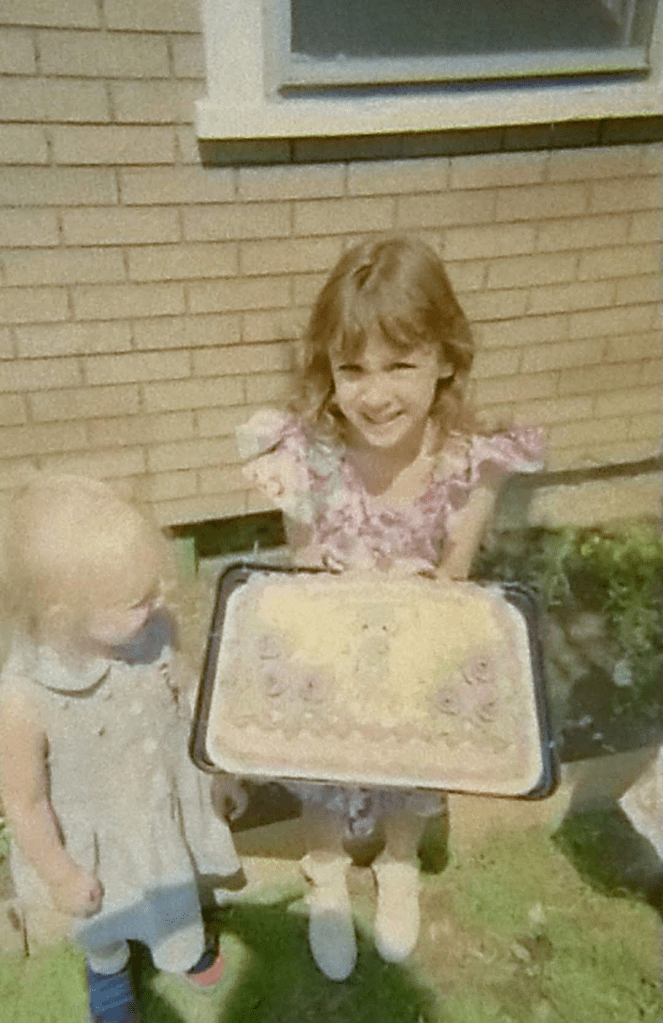
Growing up undiagnosed as autistic was like navigating a maze without a map. Instead of an autism diagnosis, I received labels like pervasive social disorder, social anxiety, dyslexia, and ADHD. While these diagnoses provided some insight, they didn’t capture the full picture of what I was experiencing. The support I received in school was minimal—mostly focused on reading and writing for a few years and encouraging my mom to enroll me in an after-school program. That was it.
Early Struggles in School
Looking back, the signs were there from the beginning. In kindergarten, I was labeled “sensitive” because I cried often and couldn’t express what was upsetting me. If a child cut me in line or I wasn’t allowed to play with pattern blocks—my favorite activity—I would go silent and cry. My teacher often asked me what was wrong, but I couldn’t find the words to explain my frustration. This led to their anger or impatience, which only made me withdraw further.
Socializing was another constant challenge. Pretend play irritated me, and I couldn’t understand why the other kids loved it so much. I just wanted to build and explore patterns with blocks, but my preference was often denied, leaving me overwhelmed and silent.
In third and fourth grade, I was placed in a transitional class where my struggles with dyslexia (or what would now be considered dysgraphia) became obvious. While I excelled at memorizing words, I struggled with phonics and spelling. My teachers wanted me to learn the “right way” to read, but that method didn’t work for me. Memorizing patterns in language was my way of navigating a system that felt nonsensical. Their insistence on phonics made me despise English for years.
Feeling Out of Place
I also struggled with friendships and social interactions. I didn’t understand the unwritten rules of relationships. I thought being polite and responding when spoken to was enough. I didn’t realize until my late teens—thanks to online resources—that relationships require initiating conversations and maintaining them actively. By then, the damage was done. My inability to connect on a “normal” level left me feeling isolated and unwanted for most of my childhood.
As a child, I followed rules obsessively. This made me a target for ridicule, often branded as a tattletale. I couldn’t understand why people disliked me for doing what I thought was right. This hyper-focus on rules and justice carried into adulthood, where it still sometimes alienates me socially.
The Adult Reality of Autism
Even now, being autistic in a world that doesn’t understand is exhausting. Maintaining friendships feels impossible at times. Socializing drains me, but isolation is equally painful. I frequently miss social cues and worry that people see me as awkward or too blunt. My strong sense of justice often sets me apart, as I advocate for causes and beliefs with a passion others may find overwhelming.
What frustrates me most is the superficial nature of autism advocacy. People will proudly display blue lights in their windows, share puzzle-piece symbols, or praise the blue trick-or-treat buckets. Yet, when it comes to understanding or accommodating autistic adults, the support often disappears. The patience, time, and energy needed to truly connect with autistic individuals are rarely offered. This disconnect leaves many of us feeling unseen and unsupported.
A Call for Authentic Understanding
Autism is not just a childhood condition—it’s a lifelong experience. My journey has been one of misunderstanding, frustration, and resilience. I’ve had to navigate the world on my terms, often without the support or understanding I needed. Advocacy must extend beyond symbols and social media posts. It requires real effort to listen, learn, and adapt to the needs of autistic individuals.
For those willing to go beyond the surface, the reward is immense. We have unique perspectives, unwavering honesty, and a deep capacity for connection—if given the chance. It’s time to move from superficial advocacy to genuine inclusion and understanding.
This is my story, and I hope it resonates with others who have felt unseen in their autism journey. Together, we can create a world where differences are not just tolerated but celebrated.
 Parenting Together
Leave a comment